Hook, Line & Sender
A local Python webhook relay that persists events, retries delivery and records attempt history.
Local portfolio demo / one configured receiver
Problem & audience
Webhook delivery can fail temporarily. A relay needs to retain accepted events, track retries and make delivery outcomes inspectable instead of silently losing messages.
A developer exploring reliable event delivery between a producer and a configured local demo receiver.
My role
Independent project developer, implementing event acceptance, persistence, signed delivery and the activity dashboard.
Implemented features
- Receives and persists webhook events before acknowledging acceptance.
- Delivers messages to one configured receiver with HMAC-SHA256 signatures and bounded retries for temporary failures.
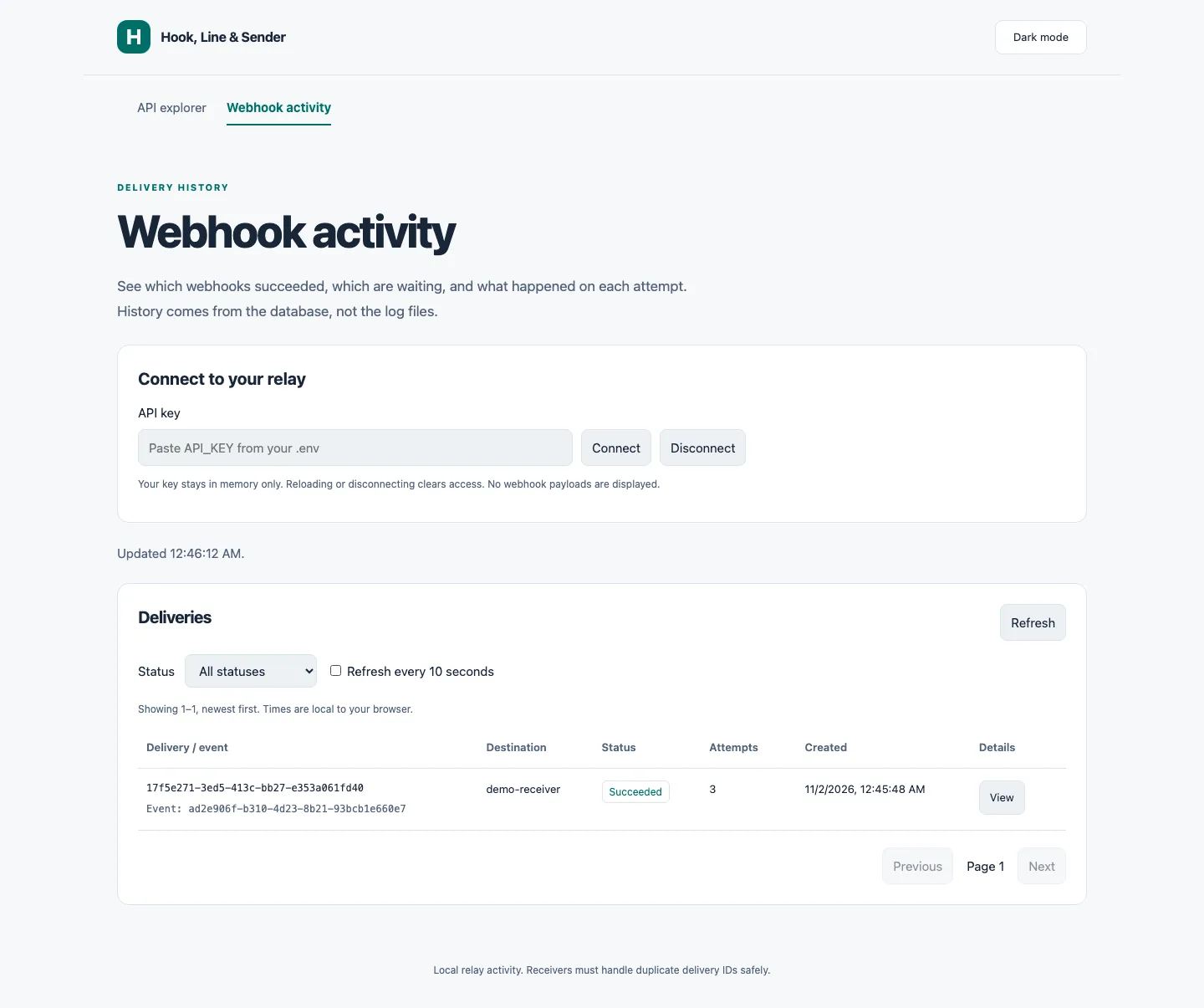
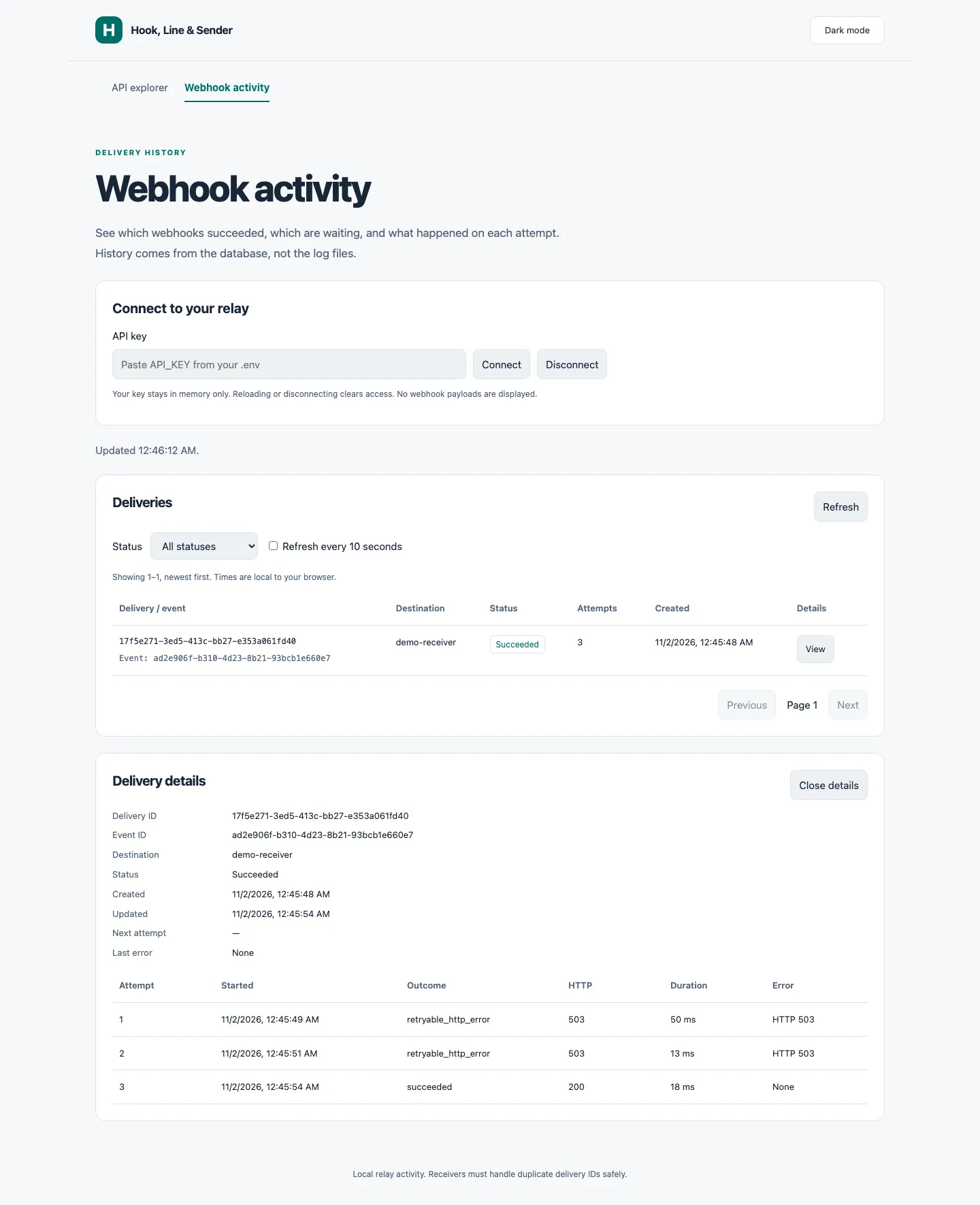
- Records delivery attempts and exposes activity and attempt details in a dashboard.
Engineering decisions
- Uses PostgreSQL as the delivery source of truth and Celery/Redis for asynchronous tasks.
- Retains the serialized request body for retries and uses leases and terminal-state checks when claiming delivery work.
- Documents at-least-once delivery rather than promising exactly-once processing or ordering.
Testing & validation
- The repository includes a pytest suite, with separate PostgreSQL-marked tests requiring a real database.
- CI documents a non-PostgreSQL test command and database-backed validation.
- During this update, an isolated PostgreSQL/Redis/local-receiver demo delivered a synthetic event after two simulated HTTP 503 responses and a final HTTP 200. The full pytest suite was not rerun.
Current scope & limitations
- Current scope is a local portfolio project with one destination and API key, not a production-ready enterprise relay.
- CMS integrations, fan-out and manual replay are not implemented.
- No guaranteed ordering or exactly-once delivery; receivers must account for duplicate delivery.
- No runtime AI or LLM integration.